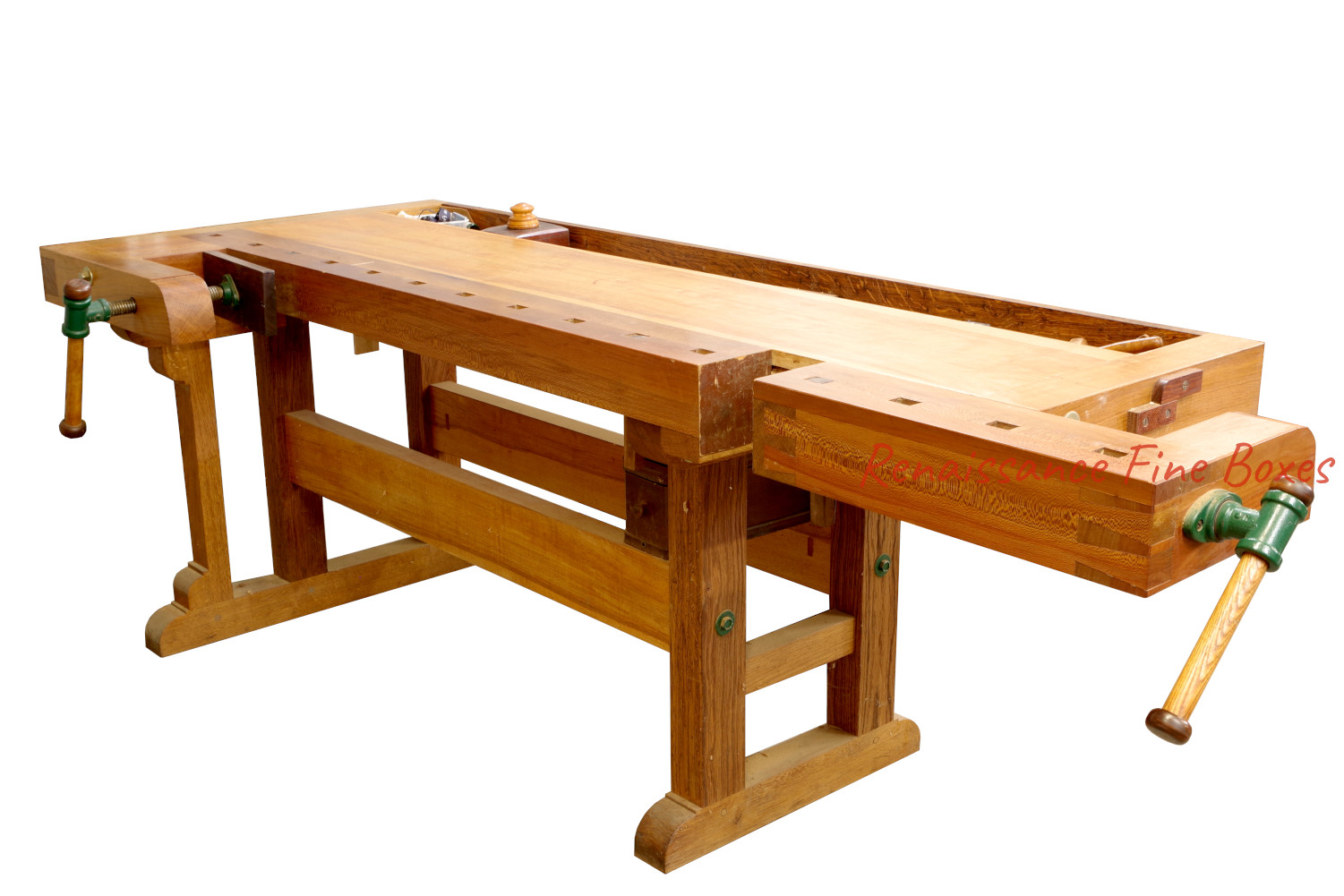
Welcome. The first thing you see, entering the workshop, is my bench, the heart of the atelier. A lot of time gets spent here working, talking to visitors like you, or drinking a morning coffee. The thing is, a craftsman can buy a good bench. A great one, he has to make himself. Mine is built from a variety of timbers, to suit function. For instance, all the moving parts of the bench are from plane tree (Platanus x acerifolia), because it is both very stable and tough, the sort of detail that makes a significant difference over time. All the timber was also grown within a few kilometres of my workshop, then cut and seasoned at the sawmill in the next village. It's difficult to quantify the value of these details, because to an extent they are subjective. Nevertheless, they impart something more than efficiency to the work. The design itself is not my own, but one perfected by generations of cabinetmakers, passed down one to the other, each making minute changes to solve one need or another. It is in this tradition that I have added a few details of my own to this one.
The Chevalet de Marqueterie
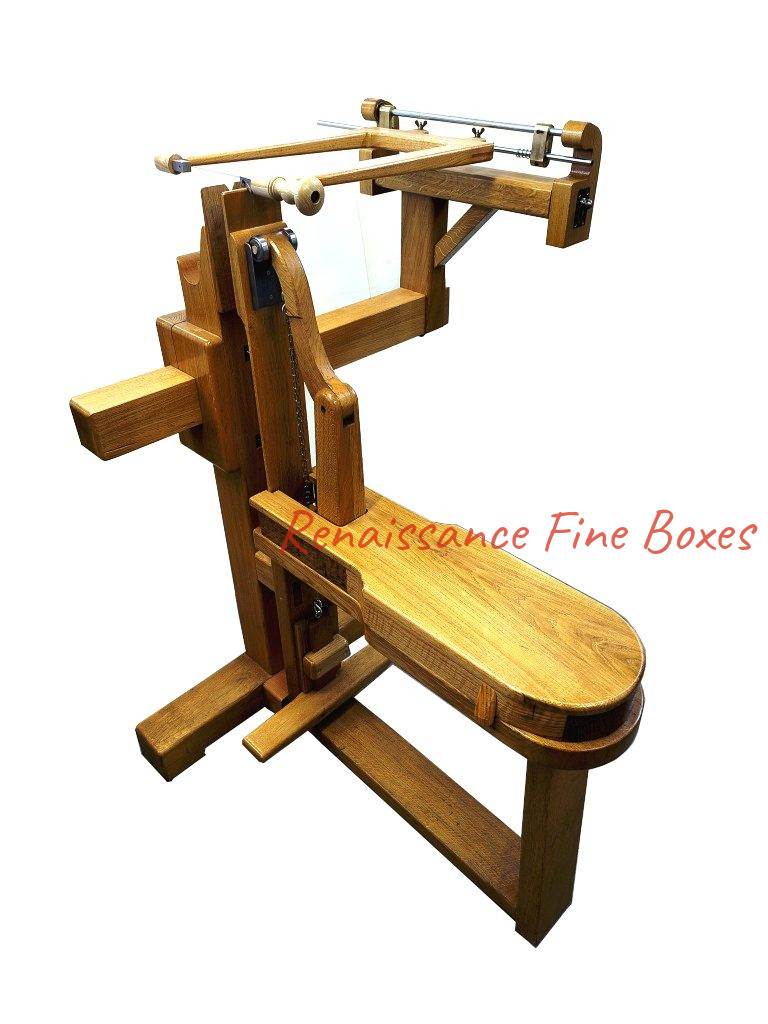
This is my Chevalet, sometimes called a marquetry donkey, possibly not so evocative of great things to come. I had bought timber and metalwork to make my own, when fortune struck and this one became available. It was made by a teacher at the École Boulle in Paris, for his own use, but built to specifications taken from an original model documented by Pierre Ramond, in his book Marquetry. Ramond was himself head of the marquetry department at the École Boulle for some years, and arguably the greatest authority on the subject of his generation. Now years later, the chevalet finally found it's way to me.
For over two centuries, this tool was a closely guarded secret of Parisian ébénistes and trade guilds. Astride it, the worker uses foot pressure to hold a packet of veneers steady in its jaws, while a hand operated saw arm moves in horizontal cutting action, to cut through several layers at once, producing perfectly matching pieces for complicated and intricate marquetry work. Other means of cutting marquetry generally use a vertically held blade. These have a number of distinct disadvantages which the chevalet overcomes.
Its origins are difficult to pin down precisely, by design. Because the guild that developed it, kept its existence deliberately hidden, and outside of a small circle in Paris, the chevalet remained virtually unknown up to this day, even among marquetry workers in other regions.
Mine sits here in my atelier, keeping me company and still faithfully doing the same job it was built for: cutting the fine, marquetry pieces that decorate many of the boxes that leave the atelier, destined to be amongst the antiques of the future.